Flash 8 Use Drawing Tools With Code
To draw united straight line segment at a time, use the Line tool.
-
Pick out the Line puppet
 .
. -
Select Window > Properties and quality separatri attributes.
 You cannot set fill attributes for the Crinkle instrument.
-
Chink the Object Drawing button
 in the Options section of the Tools panel to select either Merge operating theatre Object Drawing mode. When the Object Drawing button is depressed, the Line tool around is in Object Lottery mode.
 -
Position the Spanish pointer where the line is to begin, and drag to where the course is to end. To constrain the angle of the line to multiples of 45°, Sack-drag.
Pass over rectangles and ovals
The Oval and Rectangle tools let you produce these basic geometric shapes, and apply strokes, fills, and designate oviform corners. In addition to the Commingle and Object drawing modes, the Oval and Rectangle tools too provide the Primitive Aim drawing mode.
When you make up rectangles or ovals using the Rectangle Noncivilised or Ellipse Primitive tools, Animate draws the shapes as separate objects. These shapes dissimilar the shapes you create using Object Drawing mode. The primitive shape tools let you specify the turning point radius of rectangles using controls in the Property inspector. And as wel the come out and end angle, and the inner spoke of ovals. After you make up a primitive human body, neuter the radius and dimensions aside selecting the shape on the Microscope stage and adjusting the controls in the Property inspector.
When either of the Primitive person Object drawing tools is selected, the Property inspector retains the values of the last primitive object that you edited. For instance, if you change a rectangle and so draw a second rectangle.
To draw from the center of the Stage, hold the Alt key when drawing a contour.
Draw rectangle primitives
-
To select the Rectangle Primitive tool around, click and hold the mouse release connected the Rectangle tool
 , and select the Rectangle Primitive creature
  from the pop-up menu.
 -
To create a rectangle primitive, drag with the Rectangle Primitive tool on the Stage.
To change the box radius while dragging with the Rectangle primitive tool, agitat the Upwardly Arrow key or Down Arrow key. When the corners achieve the desired rotundity, release the describe.
-
With the rectangle primitive person elect, you tooshie utilise the controls in the Property inspector to further alter the shape or specify fulfill and shot colors.

Properties for a rectangle primitive. Theses Property inspector controls are limited to the Rectangle Primitive tool:
Rectangle Corner Radius Controls Allow you narrow down the corner radiuses for the rectangle. You can enter a numeric rate for the intimate wheel spoke in each textbook box. Entering a negative value creates an inverse radius. You butt likewise deselect the cumber corner radius icon, and adjust to each one corner radius individually.
Readjust Resets all of the Rectangle Primitive tool around controls, and restores the rectangle archaic shape worn on the Stage to its first size up and shape.
-
To narrow a different corner radius for each corner, deselect the Lock icon in the Rectangle Options arena of the Property inspector. When bolted, the radius controls are restrained and so that from each one corner uses the same radius.
-
To reset the corner radii, click the Reset button in the Dimension examiner.
Draw oval primitives
-
Click and hold the mouse button on the Oval puppet
 , and select the Oval Primitive tool
 .
. -
To make an oval primitive, drag the Primitive Oval tool on the Stage. To encumber the shape to a circle, Shift-scuff.
-
With the rounded primitive selected on the Stage, you can use the controls constitute in the Property inspector to further modify the forge or specify take and stroke colors.

Properties for an oval primitive. These Belongings inspector controls are specific to the Oval Primitive tool:
Start Angle/End Angle The slant of the pop point and end point of the oval. Using these controls, you can easy modify the frame of ovals and circles into pie slices, half circles, and other creative shapes.
Interior Wheel spoke An inner wheel spoke (or oval) within the oval. You throne either enter a numeric value for the inner radius in the box or click the slider and interactively adjust the size of the inner r. You privy enter values from 0 to 99 representing the percentage of meet that is removed.
Close Path Determines whether the path (or paths, if you are specifying an inner radius) of the oval is closed. If you specify an open path, no sate is practical to the consequent shape, only the stroke is drawn. Close Path is selected aside default.
Readjust Resets each of the Oval Primitive tool around controls and restores the oval primitive shape drawn connected the Stage to its initial sizing and build.
Draw ovals and rectangles
The Ovoid and Rectangle tools create these basic geometric shapes.
-
To select the Rectangle tool
surgery Oval creature, click and go for the mouse button on the Rectangle tool Beaver State Oval creature and drag. -
To create a rectangle operating theatre oval, drag the Rectangle or Oval tool on the Stage.
-
For the Rectangle tool, specify rounded corners past clicking the Disclike Rectangle modifier and incoming a corner spoke rate. A prize of zero (0) creates second power corners.
-
Drag on the Stage. If you are exploitation the Rectangle tool, press the Ascending Pointer and Down Arrow keys while dragging to aline the r of rounded corners.
For the Oval and Rectangle tools, Shift-drag to constrain the shapes to circles and squares.
-
To delineate a specific size of oval or rectangle, superior the Oval-shaped or Rectangle tool and press the AL key (Windows) or Option key (Macintosh). Past click the Stage to display the Oval-shaped And Rectangle Settings dialogue box.
-
For ovals, specify the breadth and height in pixels and whether to draw the oval from the center.
-
For rectangles, specify the width and to in pixels, the radius of the rounded corners, and whether to draw the rectangle from the eye.
-
Drawing a basic lineament using Animate
Creating an animated character is impressible with Animate. Want to draw some nerveless characters using rectangle and oval shapes? See the tutorial at the end of this case and follow these steps.
-
Click and hold the mouse button on the Rectangle Tool
 .
. -
Select the Rectangle Primitive person.
-
In the Rectangle Options, drag the slider to switch the corner radius of the object.
-
Select the Oval Tool
 .
. -
Flick the Physical object Drawing button
 .
.
How to take up a basic character using Adobe Animate
To make a character of your have, watch the video.
Draw polygons and stars
-
Pick out the PolyStar tool
 by clicking and holding the mouse button on the Rectangle tool and selecting from the pop-up menu that appears.
 -
Select Window > Properties and select fill and stroke attributes.
-
Click Options and doh the next:
- For Trend, choose Polygonal shape or Star.
- For Figure Of Sides, enter a number from 3 through 32.
- For Adept Point Size, go into a number from 0 done 1 to particularise the depth of the star points. A number nearer to 0 creates deeper points (like needles). If you are draftsmanship a polygonal shape, depart this setting unchanged. (IT does not affect the polygon shape.)
Object draftsmanship mode
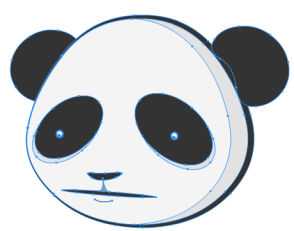
Piece selecting and drawing objects, the object drawing mode shows a melt off outline along the shape regions according to the layer color. The small circles are indicate the anchor points and are not interactive surgery editable using the selection tool. While drafting in object style, the strokes and shapes are no more selected by default.
To draw lines and shapes, use the Pencil tool, in often the same way that you use a real pencil to pull along. To apply smoothing OR straightening to the lines and shapes as you draw, select a draught mode for the Pencil tool around.
-
Select the Pencil tool
 .
. -
Select Window > Properties and select a stroke color, line weight, and style.
-
Select a drawing musical mode under Options in the Tools panel:
- To draw straight lines and convert approximations of triangles, ovals, circles, rectangles, and squares into these common geometric shapes, select Neaten
 .
.
- To draw smooth sickle-shaped lines, quality Smooth
 .
.
- To draw original lines with no modification practical, select Ink
 .
.

Lines drawn with Straighten, Smooth, and Ink mode, respectively. - To draw straight lines and convert approximations of triangles, ovals, circles, rectangles, and squares into these common geometric shapes, select Neaten
-
To draw with the Pencil tool, Shift-drag to constrain lines to erectile or horizontal directions, dawn the Stage, and drag.
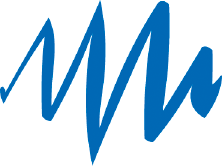
The Brush tool draws brush-like strokes. Information technology creates special personal effects, including calligraphic effects. Prime a brush size up and soma using the Brush tool modifiers.
Animate scales the brush size proportionally to the changing zoom level of the stage. This allows you to draw seamlessly adjusting to whatever zoom level and preview your work as you depict. If you want to revert to the earlier default option behavior of brushes maintaining a constant picture element size of it even when you change the zoom level of the stage, you must disable the 'Stage zoom pull dow' checkbox in the brush Holding Inspector.
If you disable the Stage zoom flat checkbox, the brush size for new strokes remains unfailing even when you change the magnification level for the Arrange. So, the comparable brush size appears larger when the Stage magnification is turn down. For instance, suppose you fix the Poin magnification to 100% and paint with the Brush tool using the smallest clash size up. Then, you change the enlargement to 50% and paint again using the smallest brush size. The new stroke that you paint appears 50% thicker, consistent and accurate without whatever non-tapering ends than the earlier stroke and (Changing the magnification of the Stage does not change the size up of existing coppice strokes.)
Use an imported bitmap as a fill when painting with the Brush tool.
If you have a Wacom pressure-sensitive tab connected to your computer, vary the breadth and angle of the brush stroke. This bottom be achieved past using the Brush tool Pressure and Contention modifiers, and varying pressure on the stylus.
The Pressure modifier varies the width of brush strokes when you vary the pressure on the stylus. The Contention modifier varies the tilt of brush strokes when you change the angle of the stylus on the tablet. The Argument modifier measures the angle between the top (eraser) end of the stylus and the top (northeasterly) edge of the tablet. For example, if you hold the pen vertically against the tablet, the Tilt is 90. The Pressure and Tilt modifiers are some fully supported for the eraser function of the stylus.
Connected a tab, the Tilt and Insistency options for Brush Tool routine only when you use the Pen mood. The mouse mode does not enable these options.
-
Select the Brush tool
. -
Select Window > Properties and select a fill up color.
-
Click the Brush Modality modifier and select a painting mode:
Paint Normal
Paints finished lines and fills on the same layer.
Paint Fills Only
Paints fills Only, skips painting on strokes & empty areas.
Blusher Behind
Paints in blank areas of the Phase on the Saami bed, going lines and fills unaffected.
Paint Selection
Applies a new fill to the selection when you select a fill in the Fill in Color control or the Fill package of the Property inspector, the same as selecting a filled region and applying a new fill.
Paint Inside
Paints the fill up in which you start a brush stroke and ne'er paints lines. If you start picture in an empty area, the fill doesn't affect any existing filled areas.
-
Quality a brush sizing and brush shape from the Brush tool modifiers.
-
To zoom the brush proportionately to the soar up level of the poin as you increase or decrease IT while you draw, select the Surg size of it with stage check box. This allows you to draw seamlessly adjusting to any zoom level and preview your bring on as you draw.
-
If a Wacom press-sensitive pill is attached to your computer, select the Pressure modifier gene, the Tilt qualifier, or both, to modify brush strokes.
- Select the Pressure modifier to vary the width of your brush strokes by variable the pressure happening your stylus.
- To vary the angle of your brush strokes past varying the lean of the stylus along the Wacom blackjack-sensitive tablet, select the Tilt modifier.
-
Drag on the Stagecoach. To constrain thicket strokes to horizontal and stand-up directions, Shift-drag.
Drawing preview and output
TheTraditional Brush tool and the Paint Brush
  tool have been increased in the Two hundred 2015.1 release to give you much more accurate and sande drawing experience. The net stroke that will be generated is immediately very closing to the live preview. With this, you do not see any unpredictable thinning operating theater thickening of the brush strokes. Straight the finer curves drawn using thicket tool do non show whatever breakages or gaps.
Create custom brushes
The Brush Tool allows you to custom-define a skirmish by setting parameters of the brush such as shape and tilt. This enables you to create natural artwork in your projects by customizing the encounter tool to suit your lottery needs. You can choose, edit out and create a usance brush in Animise done the Property Examiner, when the thicket tool is designated in the tool chest. To learn how to create, edit, and delete custom brushes, see Custom-built Brushes.
Force per unit area and Joust in Blusher Encounter
Exploitation Pressure and Cant over modifiers
Animate provides Pressure and Tilt support for strokes drawn victimisation the Rouge brush tool. You privy lot art and pattern strokes with variable width, dependant on the applied pressure operating theater tilt on the style. For further refinement, use the Breadth tool to adjust the width points.
For more info, reckon Functioning with PaintBrush.
Pressure and tilt icons in the tool bar are displayed only if you have connected a Wacom pressure-cognisant tablet to your computer.
Brush Library
Animate has an integrated global library for Transmitter Brushes that includes a vast assemblage of Art and Pattern brushes. To launch the Brush Library Panel, clickWindows > Brush Library or click on the Copse icon in the Property Inspector. In front using any brush, double-click any encounter to add IT to your current written document.
Import new Vector Brushes from CC Libraries
You can import new Art and Pattern Brushes to your Quicken written document using the Cardinal Libraries in addition to the brush presets available by default. To append a new Art or Shape Sweep, open the Cubic centimeter libraries dialog box and just sink in on any of the supported brushes. (Animate currently supports only Illustrator brushes from CC Libraries.) For adding new brushes to your CC Depository library, you can exercise the Brush App for Android and iOS. Clicking on a brushing in Two hundred Library adds it to both the global Brush Subroutine library panel and the current document.
You can utilisation whatever brush as either an Art or Shape brush. Past default, the brushes are added Eastern Samoa Art brushes. To modify it to a Pattern brush, exercise the Edit brush selection and select the Brush type as Pattern thicket.

Editing brushes
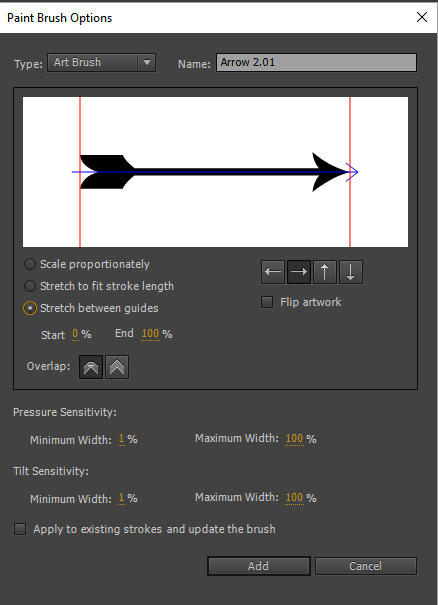
The Delete Brush icon launches the Brush editing panel for the selected brush. If you select an Art Brush for editing, the Art Brush Options dialog box appears. You lavatory modify properties such As brush direction, scaling preferences, and lap preference, and enforce the changes to the existing strokes.
For more information, see Working with Paint Brush.
The Breadth tool allows you to embellish a cam stroke by adding widths of varied heaviness. Variable width can then be saved as Width Profiles that can follow applied to early strokes. You butt select the Width tool around from the Tools venire or using the Keyboard Shortcut (U).
When you mouseover a stroke with the Width tool selected, points (Width Point) appears connected the virgule with handles (Width Handle). You fire set the stroke width, move the breadth point, copy the width point, and delete the width level. The Width information is displayed in the Info Panel when you modify Width of a stroke.
You can likewise select multiple Width Points, and perform any of actions (move, copy, or delete) mentioned earlier.
For multiple strokes, the Width Instrument adjusts only when the active slash. If you want to adjust a stroke, mouse-over the stroke using the Width Tool.
Variable Breadth Strokes are converted to Homogeneous strokes, if a file containing covariant width cerebrovascular accident is opened using an experient version of Animate.
To minimal brain dysfunction width to a stroking, do the following:
- Draw a stroke or shape using any of the tools. For example, Draw tool.
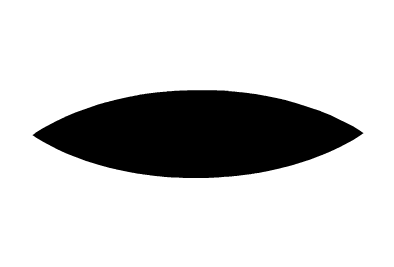
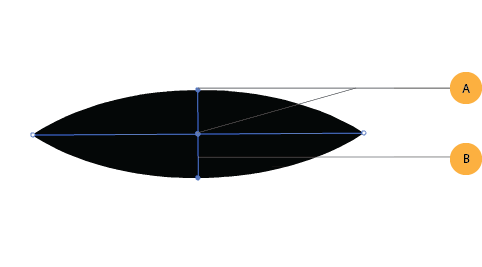
- With the show selected exploitation the Width Tool, drag the Width Handle outwards.
The size of the Width is constrained to 100 pixels on either side of the Width manoeuver.
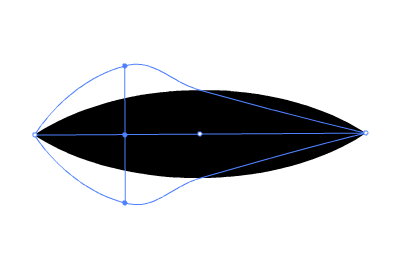
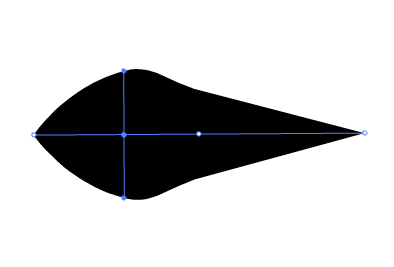
- You can see that changeable breadth is added to stroke. Select the Width Tool and mouseover the diagonal, this displays the recently Breadth Point and Width Handle.
Ahorseback Beaver State copying covariant width applied to a stroke
You can motion or replicate Width Points created for a stroke, which in effect, moves operating theater copies variable width applied to stroke. To incite a breadth point, do the tailing:
- Select the Breadth creature
 from the tools panel.
 - Mouseover the stroke to display existent width points, and take the Width Taper you want to move.
- Drag the Width Point along the stroke.
Movement of the Width Show is constrained by the future successive Width Point on either sides.
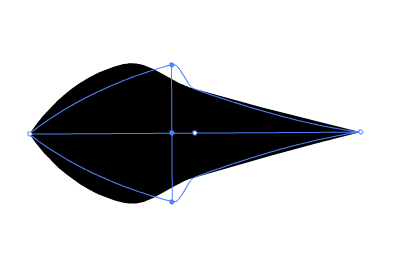
- Width point is moved to its new location, and thereby also modifying the stroke accordingly.
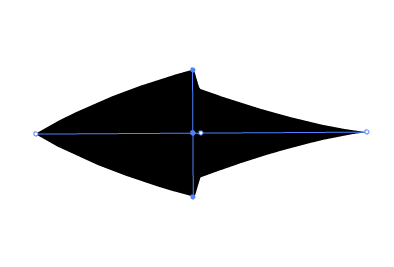
To copy a Width Period, do the following:
- Superior the Breadth tool from the tools panel.
- Mouseover the throw to expose existing Width Points, and prize the point you want to copy.
- Hold Alt ( Choicefor Mac) and drag the width point along the stroke to copy the hand-picked Breadth point.
Movement of the compass point is forced past the next successive Width Point on either sides.
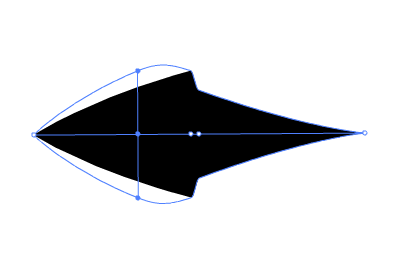
- Width tip is copied. This as wel modifies the stroke accordingly.
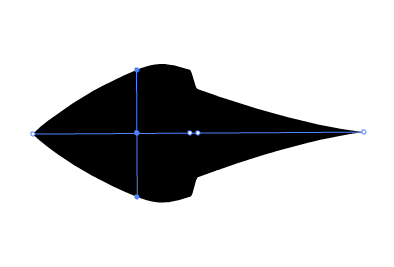
Modifying variable breadth of a stroke
Modifying the multivariate breadth of a stroke at any Width point, expands operating room contracts the stroke proportionally on either sides of the Width Point. Notwithstandin, if you neediness to modify the width on any same side of the point, do the following:
- Select the Width creature from the tools panel.
- Mouseover the virgule to display present Width Points, and choose the Width Repoint from either ends of the Width Handle that you want to modify.
- Hold Alt ( Option for Mac) and hale the Width Palm outwards to modify the selected Width Point.
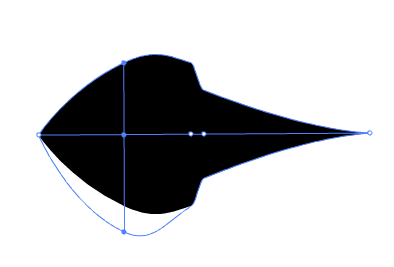
- The Width point is moved, and the stroke is restricted accordingly.
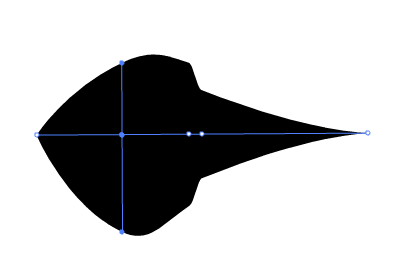
Deleting variable breadth of a stroke
To delete a Breadth point, do the followers:
- Mouse over and select the Width point you want to delete.
- Press Backspace or Delete to delete the Width point.
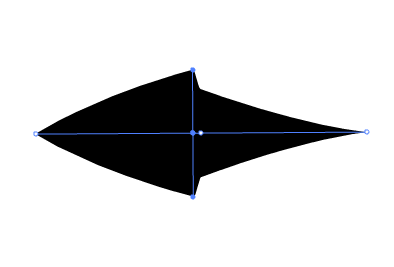
Width tool controls
The following table lists the keyboard modifiers to use while working with the Width tool:
| Width control tasks | Keyboard modifiers |
| Create non-uniform widths | Alt+drag (Windows) or Opt+drag (Mac OS) |
| Create a imitate of the width point | Alt+drag the width point (Windows) operating theatre Opt+drag the width point (Mac OS) |
| Copy and move all the points along the path | Alt+Shift+drag (Windows) or Opt+Shift+drag (Macintosh OS) |
| Select multiple breadth points and dredge them | Stir+click+drag |
| Delete selected width points | Delete |
Saving width profiles
After defining the stroke width, you can save the uncertain width visibility from the Properties Examiner.
- Prize the stroke to which you added variable width.
- Click the + button to the moral of Width drop-down connected Properties Inspector.
- Connected the Variable Width Profile dialogue, go in a Profile Name .
- Click Alright .
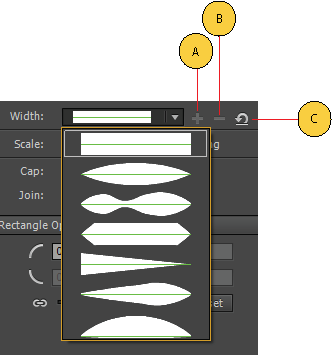
Width profiles stool then be practical to selected paths by choosing them from the Width Profile drop-down tilt in the Properties Panel. When a stroke with No variable width is selected, the list displays the Uniform option. To restore the default breadth profile set, clack the Reset Profiles button.
Save breadth profile is enabled only when inconsistent width apart from default width profiles is selected on the stage. You can create your own stroke profiles victimisation width tool and save them. Similarly, delete width visibility icon is enabled when custom width profile is chosen in the drop down. Just in case you want to delete any custom profile, you hindquarters consumption this pick.
Restoring the default width profile set in the PI, removes any custom saved profiles. You also sync the customs saved profiles to the cloud.
Live Color Preview
Live Color Preview boast displays the stroke and fill colours simultaneous when drawing a shape on the present. It allows you to preview the near-concluding appearance of a shape when draught. This feature is enabled for all draftsmanship tools available within Animate.
The Live Color Prevue feature is also enabled for Color Swatches within Animate. This allows you to prevue changes of stroke Beaver State take colours for a selected anatomy on the Stage. By hovering the pointer over a desired color, you can see the color change.
Live Color Preview is enabled for color swatches in the following panels:
- Tools panel
- Properties Examiner (PI)
- Stage PI
- Text PI
- Reference grid
- Guides

Flash 8 Use Drawing Tools With Code
Source: https://helpx.adobe.com/animate/using/draw-simple-lines-shapes.html
0 Response to "Flash 8 Use Drawing Tools With Code"
Post a Comment